


Kathmandu – Bringing back encroached forest land in Madhesh Province has remained difficult, even after the country adopted federalism under the new constitution in 2015. Data shows that encroachment has continued in different periods, and the problem is still far from solved.
Until 2002, a total of 5536.41 hectares of forest land in the eight districts of Madhesh had already been encroached. Between 2002 and 2012, another 3977.17 hectares were taken over. The trend did not stop even after that. From 2012 to 2023, an additional 179 hectares of forest area came under encroachment.
By 2023, Madhesh Province had a total of 9692.59 hectares of forest land marked as encroached.
According to Jivanath Paudel, Secretary at the Ministry of Forest and Environment of Madhesh Province, old encroachments have not been recovered, but new cases are under control. He said that whenever new encroachment takes place, the Division Forest Offices respond quickly and begin legal action. But he admitted that areas where people have already built homes and shelters are very hard to return to forest use.
District wise situation:
Among the eight districts, Sarlahi has the highest encroachment with 3023.14 hectares. Rautahat follows with 1710.92 hectares.
Dhanusha has 1658.64 hectares, Bara has 1203.02 hectares, Siraha has 976.34 hectares, Mahottari has 639.71 hectares, and Parsa has 468.14 hectares.
Saptari has the lowest level of encroachment with 12.64 hectares.
Secretary Paudel said that recovering forest land is not the responsibility of the provincial ministry alone. Cooperation is needed from many bodies, including the Home Ministry and political parties. Without strong support, reclaiming old encroached areas becomes very difficult. He also pointed to unstable political leadership in Madhesh Province as another cause of slow progress.
There is also confusion in authority. Trees and plants fall under provincial control, but land falls under the federal government. Both the Forest Act 2019 and the Provincial Forest Act 2020 have overlapping areas, which has created problems in work. Paudel said that forest protection was actually easier when forests were fully under federal control.
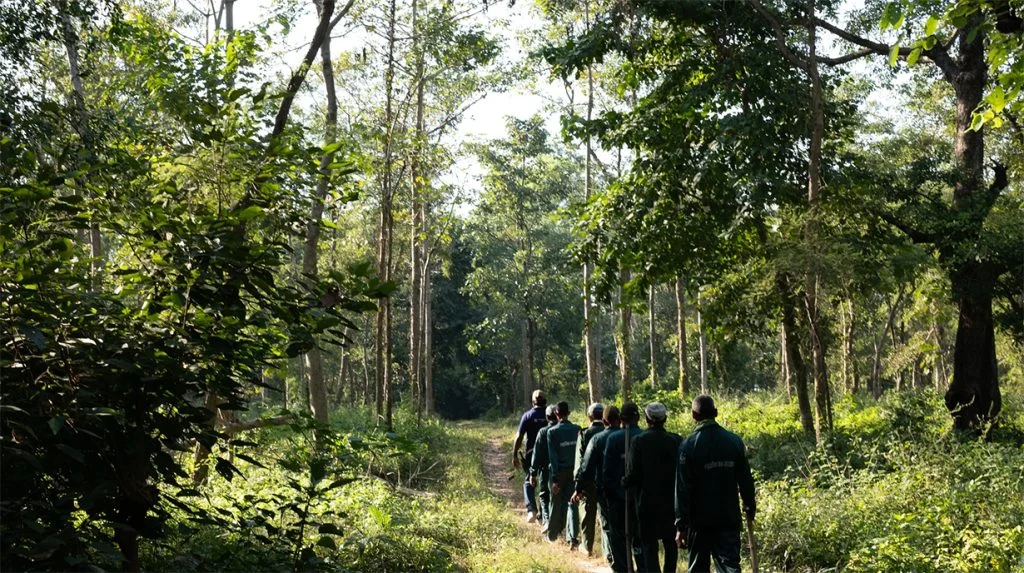
Armed forest guards are still under the federal government, but provincial officials like District Forest Officers are the ones deploying them.
Jagnnath Prasad Jaiswal, Director at the Madhesh Province Forest Directorate, said there is no clear data to show whether forest encroachment increased or decreased after federalism. Some places also face boundary disputes, which adds to the issue. He said the problem is not limited to Madhesh but is seen across the country.
Encroachment in Parsa District:
In Parsa district alone, 468.14 hectares of forest land have been encroached, according to Division Forest Officer Manjur Ahmad. Major encroached areas include Thori, Gadimai, Bindabasini and Sabaiya.
From Barah River in Thori to the west, 200.70 hectares are under encroachment, which is the highest in the district. Gadimai area has 167.68 hectares and Madhuwan area of Sakhuwa Prasauni has 32.47 hectares. Sabaiya has 22.23 hectares and Bindabasini has 12.06 hectares of encroached land.
Ahmad said the decade long conflict period saw the highest level of encroachment in Parsa. Parts of forest land were used for schools, temples, security posts, roads and other structures. High demand for timber and weak forest administration helped timber smugglers and encouraged more forest clearing.
Parsa district has a total of 11,575 hectares of forest. It includes four community forests and three partnership forests. Partnership forests cover 11,409.14 hectares, religious forests cover 34.63 hectares, private forests cover 110 hectares, and national forests cover 7.51 hectares. The forests include species like sal, khayar, masala, teak, simal, sissoo and jamun.
Ahmad said that reclaiming the encroached areas requires all concerned bodies to work together and take legal action against those who occupy forest land. He said that the provincial ministry and the Department of Forest and Soil Conservation must also provide support. Planting trees, protecting the area and clearly separating settlement land from forest land can help restore forest areas over time.